
Should You Study Business in the Ivy League or Elsewhere?
Studying business in the Ivy League is a dream for many ambitious students. The promise of elite education, strong alumni networks, and direct access to global finance careers makes these universities highly attractive. However, an Ivy League degree is not a guaranteed path to financial success. Students must carefully evaluate their career goals, academic interests, work-life priorities, and long-term aspirations before choosing this path.
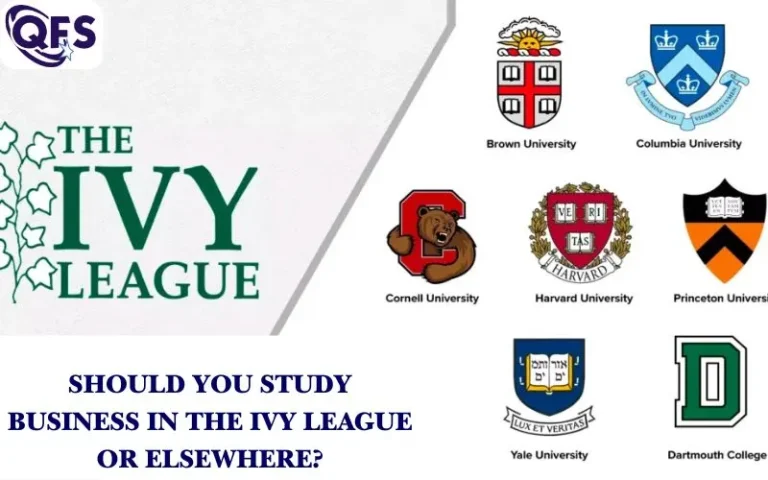
This guide explains when an Ivy League business education makes sense—and when other options may be just as valuable.
When the Ivy League Makes Strategic Sense
If your goal is to enter high-finance careers such as investment banking, private equity, hedge funds, or multinational consulting firms, then studying at an Ivy League university can be a powerful advantage. Many global financial institutions actively recruit from these campuses. Additionally, the alumni networks provide unmatched access to internships, mentorship, and early career opportunities.
However, students must understand that these roles demand long working hours, intense competition, and high performance pressure. While the financial rewards can be significant, success depends on far more than just the college name.
Does an Ivy League Degree Guarantee Wealth?
An Ivy League education does not guarantee financial success. A business degree alone does not ensure higher income than other academic disciplines. Similarly, attending a prestigious university does not automatically translate into superior financial outcomes.
Reported average salary data should be viewed cautiously. These figures do not reflect individual talent, ambition, adaptability, or leadership potential. Career success is shaped by personal skills, strategic choices, and consistent performance over time.
Choosing a Major Based on Strengths and Interests
Students should select their academic major based on genuine interest and strong aptitude. Engagement leads to deeper learning and better career outcomes. Regardless of the field chosen, most professionals today eventually interact with business fundamentals such as finance, management, and strategy.
Students may learn these concepts through formal education, practical experience, or advanced study later in life. The institution matters—but individual ability matters more.
Why Only Two Ivy League Schools Offer Business Majors
Only two Ivy League universities provide undergraduate business degrees:
- University of Pennsylvania (Wharton School)
- Cornell University (SC Johnson College of Business)
The remaining Ivy League schools maintain a strong liberal arts tradition and do not offer undergraduate business majors. Instead, they emphasize broad analytical training in economics, mathematics, public policy, and social sciences.
The Historical Academic Focus of the Ivy League
The Ivy League universities were originally founded to educate leaders in philosophy, law, theology, and public service. Professional and applied education became common much later. While modern priorities now favor career-focused education, the Ivy League still emphasizes intellectual depth and interdisciplinary learning.
Studying Business at the University of Pennsylvania
The Wharton School at the University of Pennsylvania is one of the world’s most prestigious business institutions. Students apply directly to Wharton and select from a wide range of concentrations, including finance, marketing, analytics, entrepreneurship, management, and real estate.
Wharton’s flexible curriculum allows students to pursue multiple specializations while gaining strong quantitative and leadership training.
Studying Business at Cornell University
Cornell University offers business education through the SC Johnson College of Business, which includes:
- Dyson School of Applied Economics and Management
- School of Hotel Administration
Students can specialize in areas such as finance, marketing, entrepreneurship, food business, analytics, international markets, and sustainable business. Cornell also offers one of the strongest hospitality management programs in the world.
Business-Focused Alternatives in Other Ivy Schools
For students attending Ivy League schools without business majors, there are still multiple business-related pathways:
Economics as a Business Alternative
Economics is one of the most popular majors across the Ivy League. It builds strong foundations in financial systems, markets, and quantitative analysis.
Business Clubs and Entrepreneurship Programs
Investment clubs, startup incubators, consulting societies, and innovation labs allow students to gain direct business exposure outside the classroom.
Leadership Through Student Organizations
Leadership experience in sports, service organizations, arts, and academic societies develops managerial, communication, and strategic decision-making skills—all essential for business careers.
The Changing Role of Business Education Today
Rising tuition costs have increased the focus on return on investment. Business has become the most popular undergraduate major in the United States. However, society still requires professionals trained in history, ethics, communication, and critical thinking.
Strong business leaders combine technical expertise with liberal arts thinking, ethical judgment, and long-term vision.
Final Career Perspective for Students
No single academic path guarantees success. While Ivy League business education can open powerful doors, long-term outcomes depend on:
- Personal discipline
- Work ethic
- Leadership ability
- Strategic decision-making
- Lifelong learning
Every profession today operates within a business environment. Whether through formal education or real-world exposure, business skills will become essential at every career stage.
Wondering how to get into the world’s top universities?
Final Thoughts
Studying business in the Ivy League can be a powerful launchpad for students aiming at global finance and leadership careers. However, it is not the only path to success. Students must assess their goals, academic strengths, career expectations, and lifestyle priorities before making this decision. At Quest For Success, students receive structured academic planning, profile development, test preparation, and admissions strategy to ensure they make informed, confident, and competitive choices for top global universities.
WhatsApp us