

What JEE Main Score or Rank Do NRIs Need for...
What JEE Main Score or Rank Do NRIs Need for Top NITs Under DASA?
26th September, 2026 | Abhishek Malani | 12 Min Read
Introduction
One of the first practical questions NRI families ask once they understand how DASA works is simple: what score is actually good enough? This guide walks through DASA JEE Main cutoffs for top NITs, breaking down the JEE Main rank needed for NIT CSE through DASA, real DASA opening and closing ranks for NIT Trichy as a worked example, and the minimum percentile required for DASA admission overall, so you can set realistic expectations before counselling season rather than guessing from outdated numbers.
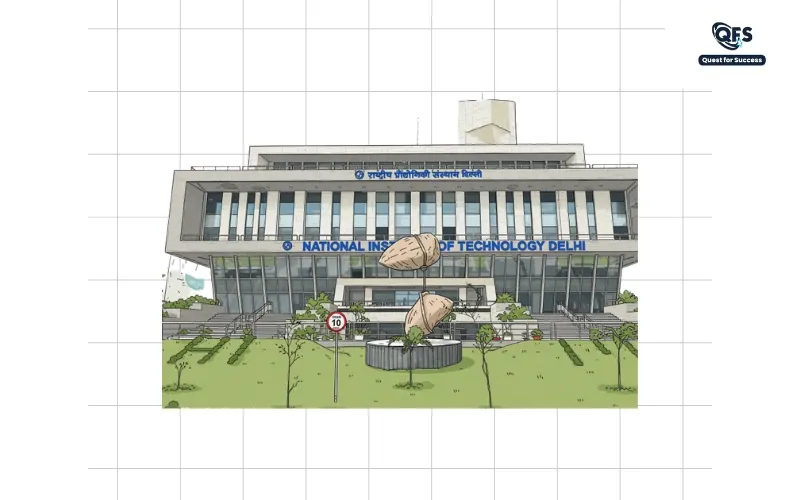
Table of Contents
How DASA Ranks and Cutoffs Actually Work
Before looking at numbers, it helps to understand what a DASA cutoff actually represents:
- DASA seat allocation runs on JEE Main All India Rank, not a separate DASA-specific exam or score; your JEE Main AIR is the single number that determines what you can get.
- Opening rank and closing rank define a range, published per institute, per programme, and per category, after each counselling round; the opening rank is the best (lowest-numbered) rank offered a seat, and the closing rank is the weakest (highest-numbered) rank still offered one.
- DASA cutoffs are numerically much higher (weaker ranks) than JoSAA cutoffs for the same institute and branch. This surprises many families: a JEE Main AIR that would be far too weak for JoSAA admission to a given NIT branch can still be well within range for the same branch under DASA, because DASA draws from a separate, much smaller applicant pool.
- Cutoffs move round to round and year to year, since they depend on how many DASA-eligible candidates apply that cycle, how they rank their choices, and how many seats are available; a number from two or three years ago should be treated as a rough reference, not a guarantee.
Minimum Percentile Required for DASA Admission
The minimum percentile required for DASA admission is a slightly different question from “what percentile guarantees a seat,” and it is worth separating the two:
- There is no separate DASA-specific minimum JEE Main percentile floor. Unlike JEE Advanced, which has category-wise qualifying percentiles that determine eligibility to sit the exam, DASA does not impose its own additional percentile cutoff on top of the JEE Main result itself.
- Academic eligibility does carry a minimum aggregate requirement, separate from JEE Main performance: candidates typically need a minimum aggregate in their Class 12 (or equivalent) qualifying exam, commonly cited in recent cycles as around 75% aggregate or 7.5 CGPA out of 10, though the exact figure has varied across years, so always confirm against the current brochure.
- In practice, a “safe” percentile for a realistic shot at top NITs under DASA is commonly cited around 95–99 percentile, though this is a rough planning benchmark from year-over-year trends, not an official threshold.
- Percentile does not translate directly to a guaranteed rank or seat, since JEE Main percentile-to-rank conversion shifts with the number of test-takers each session; use your actual All India Rank, once declared, to check against published DASA cutoffs rather than relying on percentile alone.
JEE Main Rank Needed for NIT CSE Through DASA
Computer Science and Engineering is consistently the most competitive branch under DASA, just as it is under JoSAA, so the JEE Main rank needed for NIT CSE through DASA sits at the tighter end of the DASA range:
- At the most sought-after NITs, DASA CSE closing ranks have recently landed in the high-teens-of-thousands to low tens-of-thousands range for the general DASA category in a strong year, tightening further in early counselling rounds.
- CIWG candidates in the same CSE seats often see a somewhat wider (weaker) closing rank than general DASA, though, as covered in earlier guidance on CIWG cutoffs, this gap is not fixed and can vary by institute and year.
- A commonly cited planning benchmark treats an AIR under roughly 200,000 as a reasonably safe target for CSE/ECE/IT-type branches at top NITs under DASA, with mid-tier NITs and less oversubscribed branches accepting considerably weaker ranks, sometimes into the hundreds of thousands.
- Rank alone is not the full picture. Branch, institute, round number, and whether you are applying under general DASA, CIWG, or another sub-category all shift where the actual cutoff lands, so treat any single number as an estimate to plan around, not a hard target.
DASA Opening and Closing Ranks for NIT Trichy: A Worked Example
NIT Tiruchirappalli (Trichy) is consistently one of the most sought-after institutes under DASA, which makes it a useful, if demanding, worked example of real DASA opening and closing ranks for NIT Trichy:
| Programme / Category (2025 cycle) | Round 1 Rank | Final Round Closing Rank |
|---|---|---|
|
B.Tech CSE, General DASA
|
Opening around 16,522
|
Closing around 17,478
|
|
B.Tech CSE, CIWG
|
Cited around 16,522 in the same cycle’s CIWG list
|
Broadly comparable to general DASA that year, though this has varied across cycles
|
|
B.Arch, General DASA
|
Opening around 19,111 |
Closing around 21,988
|
|
B.Arch, CIWG
|
Opening around 1,384 (lowest/most competitive CIWG rank that year)
|
Consistently the most sought-after CIWG programme at NIT Trichy
|
|
Overall General DASA range (all programmes)
|
From roughly 16,522
|
Up to roughly 974,217 for the least competitive branches
|
|
Overall CIWG range (all programmes)
|
From roughly 1,384
|
Up to roughly 333,855 for the least competitive branches
|
The spread here is the real lesson: NIT Trichy’s CSE and Architecture programmes close in the high-teens-of-thousands under DASA, while less in-demand branches at the very same institute, in the very same cycle, close well into the hundreds of thousands. Year-on-year, NIT Trichy’s CSE DASA closing rank has itself moved around noticeably (for example, cited figures include roughly 18,737 in 2024 and 33,194 in 2023 in some published trackers), which underscores why a single past-year number should be treated as a reference point, not a prediction. Always check the current cycle’s official round-wise cutoff release from the coordinating institute or CSAB before finalising choices.
What Cutoffs Look Like Across Top NITs and IIITs
- Traditionally, NIT Trichy, NIT Warangal, NIT Surathkal, NIT Calicut, and similarly ranked NITs post the tightest DASA cutoffs, especially in CSE, ECE, IT, and closely related branches.
- Leading IIITs show a comparable pattern. For instance, one recent cycle’s DASA/CSAB cutoff for B.Tech CSE at a top-tier IIIT closed around the mid-thirties-of-thousands across the first three rounds, broadly in the same competitive band as the top NITs’ CSE seats.
- Mechanical, Civil, and other less oversubscribed branches carry noticeably more relaxed cutoffs, often into the hundreds of thousands, even at the same in-demand institutes.
- Cutoffs are never identical two years running. Total applicant numbers, JEE Main difficulty, and how many candidates the coordinating institute admits that cycle all shift the numbers, sometimes substantially, from one year to the next.
Why DASA Cutoffs Differ So Much From JoSAA Cutoffs
It is worth being explicit about why the numbers look so different from the regular JoSAA cutoffs students may be more familiar with:
- Different, much smaller applicant pools. JoSAA draws from roughly 1.2–1.5 million JEE Main test-takers competing for the full national seat matrix, while DASA draws only from NRI/OCI/PIO/Foreign National candidates who studied abroad and separately meet DASA eligibility.
- Supernumerary seats, not shared seats. DASA seats sit outside the regular sanctioned intake, so they are not competing against the general JoSAA pool at all; the two rank scales measure different competitions entirely.
- This is exactly why a comparatively weaker JEE Main AIR can still secure a strong NIT branch through DASA when the same rank would not come close under JoSAA, and why DASA-eligible candidates should always check DASA-specific cutoffs rather than assuming JoSAA numbers apply.
How to Use Cutoff Data to Plan Your Choices
- Pull the most recent 2-3 years of round-wise cutoffs for your target institutes and branches, rather than relying on a single year or a single round’s figure.
- Rank your choices realistically across a spread, mixing a couple of ambitious picks with several institutes/branches where your expected AIR sits comfortably inside recent closing ranks.
- Watch round-to-round movement, not just the final closing rank. Early rounds are often much tighter than the final round, so a rank that looks out of reach in Round 1 may still have a real shot by the last round or the CSAB Special rounds.
- Cross-check general DASA and CIWG separately if you are eligible for both, since, as the worked NIT Trichy example shows, the two categories do not move in lockstep.
Summary
On DASA JEE Main cutoffs for top NITs, the key pattern is that DASA cutoffs run far weaker (numerically higher) than JoSAA cutoffs for the same branch and institute, because DASA draws from a separate, smaller applicant pool for supernumerary seats. There is no distinct minimum percentile required for DASA admission beyond the underlying JEE Main result and a separate Class 12 aggregate requirement, though a rough planning benchmark of the mid-90s percentile and up is commonly used for realistic shots at top NITs. The JEE Main rank needed for NIT CSE through DASA typically sits in the high-teens-of-thousands to low tens-of-thousands for the most competitive institutes in a given year, tightening in early rounds and loosening slightly by the final round. And the worked DASA opening and closing ranks for NIT Trichy show just how wide the spread can be within a single institute, from closing ranks in the high-teens-of-thousands for CSE and Architecture down to the hundreds of thousands for less sought-after branches, which is why every serious applicant should check the current year’s official cutoff release before building a final preference list.
FAQs
At the most competitive NITs, recent DASA CSE closing ranks have landed in the high-teens-of-thousands to low tens-of-thousands range for the general category, though this shifts every year based on applicant numbers. Always check the current cycle’s round-wise cutoff before assuming a specific rank is safe.
In the 2025 cycle, general DASA closing rank for CSE at NIT Trichy was cited around 17,478, with Round 1 opening around 16,522. B.Arch and other branches showed a much wider range, illustrating how much cutoffs vary by programme even within one institute and year.
DASA itself does not set a separate minimum JEE Main percentile beyond the exam’s own results; admission runs on your resulting All India Rank against published cutoffs. There is, separately, a minimum Class 12 aggregate requirement, commonly cited around 75% or 7.5 CGPA in recent cycles, which should be confirmed against the current brochure.
Because DASA seats are supernumerary and allocated from a separate, much smaller pool of NRI/OCI/PIO/Foreign National applicants, not the general JoSAA applicant pool of over a million JEE Main test-takers. The two rank scales are not directly comparable.
Meaningfully. For example, NIT Trichy’s DASA CSE closing rank has been cited at different levels across recent cycles, moving up or down depending on how many eligible candidates applied and how they ranked their choices that year. Always use the most recent official data for planning.
Want help interpreting your expected JEE Main rank against current DASA cutoffs for your target NITs? Reach out to Quest for Success; we’re here to help you build a realistic, well-ranked preference list.
While You're Here

CIWG Scheme Explained: How Gulf NRIs Save Over 70% on College Fees
CIWG Scheme Explained: How Gulf NRIs Save Over 70% on...

Can You Get into IITs Through DASA? (NRI Admission Guide to Top Colleges)
Can You Get into IITs Through DASA? (NRI Admission Guide)...
WhatsApp us