

Digital SAT Outcomes Across QFS Students: Scores, Trends and What...
Profile Building for Competitive Undergraduate Admissions
29th October, 2026 | Abhishek Malani | 10 Min Read
Introduction
A strong profile isn’t a longer activity list; it’s a smaller number of things done with real depth, pointed in a direction admissions officers can actually see. This page breaks profile building into its nine core components, and shows what a credible Grade 9, 10 and 11 profile looks like in each, using anonymised arcs from real students.
Book a free consultation if you want a profile plan built around your child’s actual grade and interests, not a generic checklist.
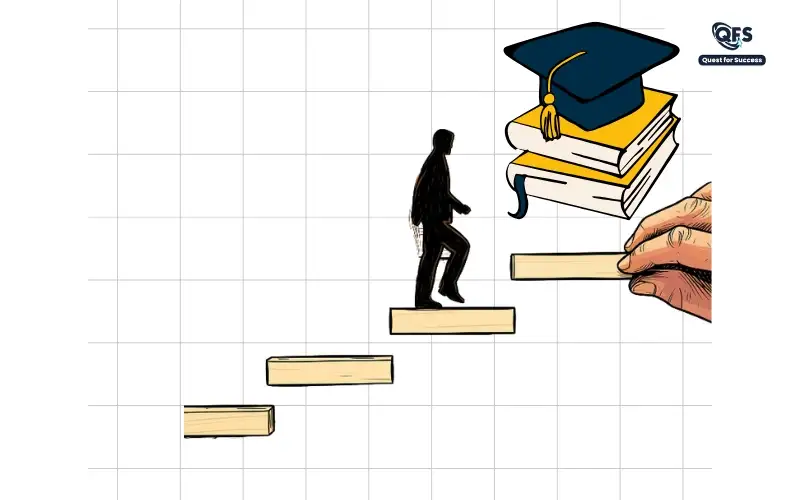
Table of Contents
What "Profile Building" Actually Means
Admissions committees aren’t scoring a list of activities; they’re looking for evidence of a sustained interest, pursued with initiative, that tells them something specific about who the applicant is. A profile with nine unrelated one-line entries reads weaker than one built around two or three themes that connect to each other and deepen over three years. The components below are the building blocks; the arc across Grades 9-11 is what turns them into a profile.
The Nine Components of a Strong Profile
1. Research Papers
Independent or mentor-guided research, a literature review, an original study, or a conference or journal submission signals the kind of intellectual initiative selective universities weigh heavily, especially for STEM, economics, and social science applicants.
- Grade 9: reading broadly in an area of interest; starting to identify an open question worth investigating.
- Grade 10: a first guided research project, often with a mentor, on a narrow, well-defined question.
- Grade 11: a completed paper, ideally submitted to a student journal or conference, that can be cited directly in applications.
Anonymised arc: a Grade 10 student interested in environmental science started with a mentor-guided literature review on urban air quality; by Grade 11, she had an original data-based paper on Bengaluru’s air quality trends, submitted to a student research journal, a direct, citable anchor for her “why environmental science” essay.
2. Design Portfolios
For students pursuing architecture, design, art, film or related fields, a portfolio is often a formal application requirement, not just a supporting document.
- Grade 9: experimenting across mediums to find genuine interest rather than committing early.
- Grade 10: building 3-4 pieces with real technical range, not just quantity.
- Grade 11: a curated, coherent portfolio of 10-15 pieces aligned to the specific programmes being targeted, since requirements vary by university.
3. Community Service
Sustained, specific involvement reads far stronger than a short, generic volunteering stint collected for the sake of a certificate.
- Grade 9: trying a few different causes to find real engagement.
- Grade 10: committing to one organisation or issue with regular, documented involvement.
- Grade 11: taking on a leadership or ownership role within that same commitment, designing a programme, leading a team, or scaling an initiative.
Anonymised arc: a Grade 9 student volunteered occasionally at a local NGO; by Grade 11, he was running a weekend literacy programme he’d designed himself for 40+ children, with a tracked impact record, the same cause, three years of escalating ownership.
4. Internships
Internships demonstrate real-world exposure to a field and, increasingly, are accessible to high schoolers through structured programmes, not just family connections.
- Grade 9-10: shadowing or short exposure internships to test interest.
- Grade 11: a substantive internship (4-8 weeks) with real responsibility and, ideally, a tangible output, a project, a report, a prototype.
5. Leadership Projects
Formal titles (club president, head boy/girl) matter less than evidence of initiative, something the student started, organised or meaningfully improved.
- Grade 9-10: taking on smaller roles within existing clubs or teams to build experience.
- Grade 11: founding or significantly expanding something, a club, an event, an initiative, with a measurable outcome.
6. Competitions and Olympiads
Subject olympiads, case competitions, hackathons and similar events provide external, objective validation of ability in a specific area.
- Grade 9-10: entering broadly to identify strengths.
- Grade 11: focusing on 1-2 competitions aligned with the intended major, aiming for results strong enough to cite specifically (not just “participated in”).
7. Entrepreneurship and Independent Ventures
A genuine attempt at building something, a small business, an app, a social venture, shows initiative and risk tolerance, even if it doesn’t “succeed” commercially.
- Grade 10-11 is the realistic window: earlier attempts rarely have enough runway to produce something application-worthy. What matters is the thinking and execution, not revenue.
8. Personal Projects and Independent Study
Self-directed projects. A coding build, a long-form writing project or a self-taught skill taken seriously shows curiosity that doesn’t depend on a school programme or external validation.
- Grade 9-10: open-ended exploration.
- Grade 11: one project taken to a genuine finish line, published, launched, or presented somewhere.
9. Certifications and Online Coursework
Structured coursework (university-level MOOCs, recognised certifications) signals academic reach beyond the school curriculum, particularly useful where a student’s board doesn’t offer advanced options in their area of interest.
- Most useful when it directly supports one of the other eight components; a certification taken in isolation, unconnected to anything else on the profile, adds little on its own.
What a Credible Profile Looks Like by Grade
| Grade | Focus | What "done well" looks like |
|---|---|---|
|
9 |
Exploration across 3-4 components
|
Breadth, with early signs of a genuine interest forming
|
|
10 |
Narrowing to 2-3 components
|
A mentor-guided project, a committed service role, or an internship that goes beyond shadowing
|
|
11 |
Depth and documentation
|
A completed, citable output in each chosen area: paper, portfolio, led initiative, internship outcome
|
Common Mistakes
- Breadth without depth: ten activities with one line each reads as padding, not passion.
- Starting everything in Grade 11: the “done well” column above assumes groundwork from Grade 9-10; compressed timelines produce thinner results.
- No connective thread: nine unrelated activities tell the committee less than three that build on each other and point toward a clear interest.
- Chasing resume items over genuine interest: admissions officers read a lot of applications; manufactured enthusiasm is usually obvious.
How Can Quest For Success Help?
Navigating undergraduate admissions requires a personalized roadmap tailored to a student’s unique strengths, interests, and timeline. Quest for Success offers end-to-end guidance to help students build a compelling, authentic profile:
- Personalized Profile Strategy: We identify 2-3 high-impact areas aligned with target majors and universities, avoiding generic checklists.
- Research & Project Mentorship: Connect with expert mentors to produce publishable research papers, portfolios, or independent ventures.
- Execution & Timeline Management: Ensure multi-year progression across Grades 9-11 so all projects culminate in tangible, citable outcomes.
- Application Narrative & Essays: We weave your achievements into a cohesive story that stands out to admissions officers.
Summary
A competitive undergraduate profile is built on depth, initiative, and narrative cohesion rather than sheer volume. By focusing on 2-4 key components across Grades 9 to 11, students can develop substantive accomplishments, such as research papers, leadership projects, or design portfolios, that authentically showcase their intellectual curiosity and readiness for top universities.
Explore More College Admissions Resources
Looking to strengthen your college application and stand out to admissions committees? Explore these guides:
- Leadership and Its Edge in College Admissions — learn how leadership experiences can strengthen your college application.
- Community Service for College Admissions — discover how meaningful community service can demonstrate initiative and social impact.
- Summer Planning for College — explore ways to use your summer productively through academic enrichment, internships, and extracurricular activities.
- College Application Timeline for Class 11 — plan your application milestones and prepare for upcoming admissions deadlines.
- Ivy League Admissions — understand the key requirements and strategies for applying to Ivy League universities.
- How to Get Into College — explore essential steps to build a competitive application and improve your admission prospects.
FAQs
Fewer, deeper activities consistently outperform long lists. Two or three well-developed components with a clear thread between them is usually stronger than seven shallow ones.
No, but it’s tighter. Grade 11 can still produce a strong, focused profile in 2-3 areas, it just leaves less room for exploration and requires faster, more decisive choices.
No. Most strong applicants cover 2-4 of these well, chosen to support a clear area of interest, rather than attempting all nine.
Directly, the strongest essays are usually built on specific, concrete evidence from the profile (a research finding, a moment from a leadership project), rather than generic reflection with nothing to point to.
Somewhat. US applications place more weight on a distinctive personal narrative built from the profile; UK applications (via UCAS) weight academic and subject-specific depth more heavily than breadth of extracurriculars.
Want help identifying which 2-3 components are worth building for your child’s actual interests and timeline? Book a free consultation with Quest for Success.
While You're Here

University of Florida: Acceptance Rate and Admissions
University of Florida (UF) Admissions for International Students: A Complete...

Top South Carolina Colleges Worth Considering
Best Colleges in South Carolina for International Students: USC Columbia,...
WhatsApp us